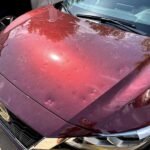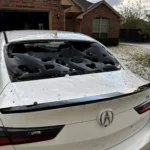
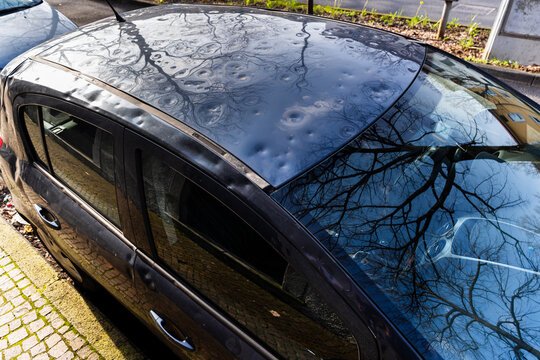
When a violent thunderstorm sweeps across North Texas, vehicle owners are often left dealing with pitted hoods, creased door panels, and broken glass. Filing a claim to restore your vehicle can feel daunting, especially if you are unfamiliar with the steps involved. What You Should Know is that navigating the insurance recovery process is a straight-forward financial safeguard designed to protect your vehicle’s equity without penalizing you. Securing a comprehensive assessment for Auto Hail Damage Repair in Fort Worth, TX allows you to initiate your policy benefits correctly, ensuring that every point of impact is professionally documented and fully funded by your insurer before secondary weather exposure causes further damage.
Understanding Your Policy Coverage (Comprehensive vs. Collision)
Before filing a claim, it is essential to understand which part of your auto policy covers storm-related destruction. Many drivers mistakenly worry that filing a claim will cause their monthly premiums to skyrocket.
Key Insurance Definitions to Keep in Mind:
- Comprehensive Coverage: This policy section handles non-collision physical losses, including falling objects, severe storms, glass breakage, and vandalism.
- “Act of Nature” Status: Weather impacts are legally classified as an unavoidable act of nature. Texas insurance guidelines generally protect policyholders from individual premium rate increases for single non-fault comprehensive claims.
- Deductible Application: Your out-of-pocket obligation is limited to your pre-selected comprehensive deductible (typically $250, $500, or $1,000), regardless of whether the total restoration cost reaches $3,000 or $12,000.
Documenting the Damage and Initiating Your Claim
Filing your claim promptly puts your vehicle near the top of the queue during a major local storm event, ensuring faster claims processing and quicker repairs.
Best Practices for Initial Claim Filing:
- Capture High-Resolution Photos: Photograph horizontal panels (hood, roof, trunk) and vertical doors under indirect lighting or shade to highlight surface dimples.
- Record Storm Metadata: Note the exact date, time, and city location where the storm struck to validate the storm event for your claims adjuster.
- Contact Your Insurer’s Claim Line: Report the claim via your insurance company’s mobile application or phone hotline to obtain a official claim number and initial instructions.
Navigating the Initial Insurance Appraisal
After you open a claim, your insurance provider will schedule an appraisal to write an initial repair estimate. Understanding how this initial estimate works prevents costly misunderstandings.
Photo-App Estimates vs. In-Person LED Inspection
In recent years, many insurance carriers ask policyholders to submit photos through a mobile app to generate a rapid initial quote. While convenient, camera photos miss over 50% of shallow surface impressions, creased edges, and clear coat micro-fractures.
Step 4: Selecting the Right Restoration Methodology
Once your claim is approved, selecting the correct technique determines whether your vehicle retains its original factory value or suffers paint degradation over time.
Why Certified Paintless Restoration Preserves Value
The industry standard for restoring storm-damaged vehicles is non-invasive paintless dent removal. Certified technicians utilize precision hand tools to massage bent sheet metal back to its original factory contour from behind the panel.
Advantages of Paintless Restoration:
- Preserves Original Factory Paint: Keeps the durable factory e-coat and clear coat untouched, protecting manufacturer finish and corrosion warranties.
- Eliminates Artificial Body Fillers: Completely avoids synthetic body putty like Bondo, which can crack, shrink, or discolor under harsh UV rays over time.
- Clean History Reports: Preserves factory paint so your vehicle maintains maximum resale valuation on vehicle history reports.
- Faster Turnaround: While traditional collision body shops take weeks to sand and repaint panels, non-invasive pdr dent repair is often completed in just a few days.
Steering Clear of Risky “DIY” Repair Shortcuts
Faced with a deductible, some vehicle owners attempt cheap internet DIY tricks like applying dry ice, using hot glue pulling kits, or heating panels with industrial heat guns to pop out dimples themselves.
The Hidden Hazards of DIY Attempts:
- Thermal Shock Cracking: Applying extreme cold like dry ice to warm metal freezes the clear coat instantly, causing it to shatter and peel away.
- Paint Stripping: Cheap retail hot glue adhesives easily pull original clear coat directly off the primer, creating an expensive repainting job.
- Metal Over-Stretching: Pulling metal without specialized LED line boards routinely creates raised high-spots that permanently stretch the metal, destroying your vehicle’s trade-in value.
Partnering with Millennium Car LLC for Seamless Recovery
Working with an established local facility ensures that your insurance claims process is handled accurately and your car is restored to factory standards without financial stress.
At Millennium Car LLC, we specialize in comprehensive automotive storm restoration and non-invasive panel care. Understanding how to properly file and execute a hail damage repair claim guarantees that your vehicle receives full insurance coverage without unexpected expenses. Our certified technicians perform detailed LED matrix light board evaluations to map out every single micro-impact across your vehicle.
Our team at Millennium Car LLC manages your entire claim from start to finish, coordinating directly with your adjuster to approve supplemental estimates for structural metal, replacement trim, and glass. Utilizing advanced paintless ding repair techniques, we deliver reliable, high-quality craftsmanship that returns your vehicle to pre-storm showroom condition.
Conclusion
Understanding how auto insurance claims work after a severe weather event gives you total confidence throughout the restoration process. By utilizing your comprehensive policy benefits, scheduling an in-person LED inspection, avoiding risky DIY repair shortcuts, and choosing non-invasive paintless restoration, you preserve your vehicle’s factory finish, structural soundness, and equity. Partnering with a dedicated local repair specialist ensures your insurance claim is handled smoothly from start to finish, returning your vehicle to pristine condition with complete peace of mind.